
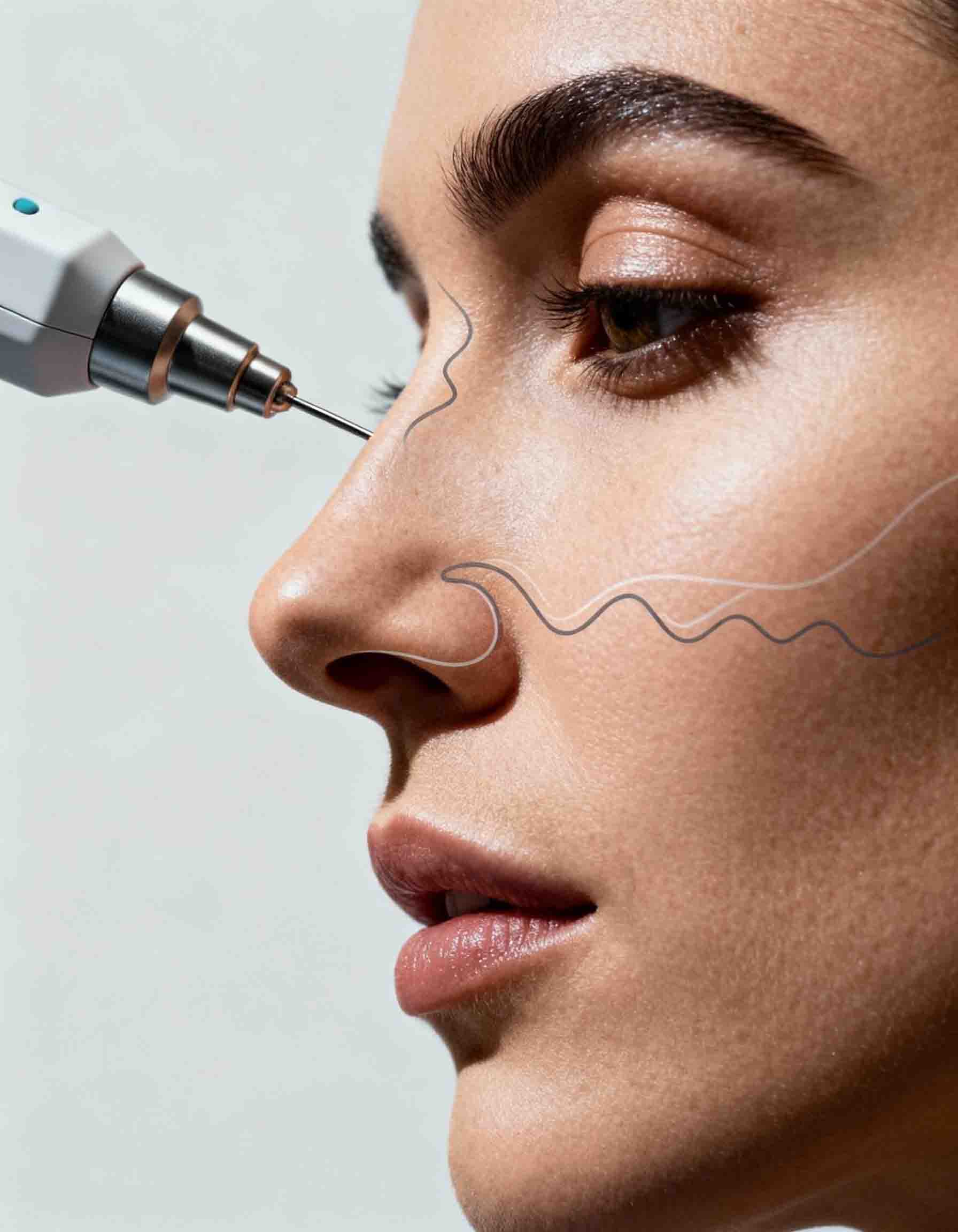
Piezoelectric technique in Rhinoplasty: Precision, Preservation, and Predictability Across Diverse Patient Populations
Ultrasonic technology has reshaped the landscape of modern rhinoplasty over the past decade, marking one of the most significant evolutions in nasal surgery since the shift from reductive to structural techniques. Piezoelectric-powered rhinoplasty is commonly referred to as Piezo rhinoplasty or ultrasonic rhinoplasty. This technology has become a defining tool for surgeons seeking greater accuracy, reduced trauma, and more consistent outcomes. While early adoption was often centred in European practices, the technique has now gained global traction, supported by a growing body of evidence and widespread clinical success.
Importantly, Piezo technology has proven particularly valuable across a diverse spectrum of facial and nasal anatomies. Given the multicultural patient populations seen throughout the Pan Asian region and the global nature of the association’s membership, it is essential to understand how ultrasonic rhinoplasty can be applied across a range of structural characteristics, from thick soft tissue to delicate bony vaults, from low-dorsum augmentation needs to high dorsal humps.
This article explores the principles, advantages, limitations, and future direction of Piezo-powered rhinoplasty and outlines how this technology enhances surgical finesse and predictability in patients of all backgrounds.
The Science Behind the Technology
Piezoelectric instruments operate by converting electrical energy into precisely modulated ultrasonic micro-vibrations. These oscillations selectively cut mineralised structures while sparing soft tissue. Unlike traditional rasps or osteotomes, the Piezo handpiece can sculpt bone with micrometre-level precision. This “selectivity” is the cornerstone of its safety profile: cartilage, mucosa, vessels, and skin remain largely protected from accidental trauma.
This mechanical efficiency translates into smoother bone edges, controlled osteotomies, and fewer irregularities. These qualities are particularly appreciated in both preservation and structural rhinoplasty philosophies.
Advantages of piezo-rhinoplasty techniques:
1. Precision in Dorsal Preservation and Hump Reduction
Ultrasonic devices allow for controlled dorsal modifications, whether reducing a prominent hump or refining irregularities. In patients with:
- High dorsum or bony humps (more common in Caucasian and Middle Eastern noses), Piezo facilitates smooth, continuous urbanisation without destabilising the keystone area.
- Lower dorsum requiring augmentation (common in many Southeast Asian populations), Piezo ensures refined shaping of the bony foundation before grafting or implant placement.
Across all groups, the predictable bone contouring leads to a more harmonious dorsal aesthetic.
2. Reduced Soft Tissue Trauma
The selective action on bone minimises collateral trauma. This is especially useful for:
- Thicker-skinned patients, where postoperative swelling traditionally persists longer.
- Revision cases, where soft tissue planes are scarred and fragile.
- Patients prone to prolonged inflammation or hyperpigmentation.
Although there could be increased soft tissue oedema due to wider dissection, if done the right way and using right techniques, this oedema and ecchymosis can be significantly reduced. This will translate into faster recovery and earlier appreciation of results, an increasingly important factor in today’s social and professional landscape.
3. Accuracy in Osteotomies
Precise external, internal, or intermediate osteotomies can be performed with fine control over the angle, pattern, and extent of the cut. This significantly decreases the risk of:
- greenstick fractures in wrong planes
- asymmetric mobilization, or
- inadvertent spread of fractures into the maxilla or frontal process.
For patients with wide nasal bases, strong bones, or significant deviation, Piezo allows a finesse that manual tools cannot reliably match.
4. Enhanced Functional Outcomes
Piezo facilitates delicate work at the bony-cartilaginous junction and in septal deviation cases. Its fine-tuned sculpting helps achieve:
- better correction of high septal deviations,
- improved internal valve dimensions, and
- stable long-term mid-vault architecture.
This functional benefit is relevant across the broad spectrum of nasal anatomies.
5. Consistency and Reproducibility
Perhaps the greatest value is the reduction in variability. Piezo enables surgeons to deliver outcomes that more closely match the planned aesthetic approach, regardless of the starting anatomy.
Applications Across Ethnicities: A bespoke approach towards your patients
1. European and Middle Eastern Noses
Characteristics: high dorsal humps, strong bone, defined radixes, higher deviation rates.
Piezo advantage: controlled hump reduction and precise asymmetric corrections while preserving stability.
2. East and Southeast Asian Noses
Characteristics: lower dorsum, thicker skin, weaker lower lateral cartilage, and flatter bony pyramid.
Piezo advantage: smooth refinement of low-profile bone, minimal tissue trauma, and excellent bed preparation for dorsal grafting or implants.
3. South Asian Noses
Characteristics: thicker skin, strong bones, frequently deviated septum, and complex mid-vault anatomy.
Piezo advantage: gentle handling of soft tissue combined with robust power for dense bone reshaping.
4. Mixed-Race and Global Populations
Characteristics: unpredictable soft tissue thickness and mixed bony architecture.
Piezo advantage: versatility and reproducibility across variable structures.
Integrating Piezo into Contemporary Rhinoplasty Philosophies
- In Preservation Rhinoplasty: Ultrasonic tools allow gentle dorsal “push-down” or “let-down” techniques, smoothing residual irregularities and enabling more controlled lowering.
B. In Structural Rhinoplasty: Piezo creates more exact dorsal aesthetic lines, optimises osteotomies and prepares beds for grafts with accuracy.
C. In Hybrid Approaches: Most modern rhinoplasty is neither entirely preservation nor purely structural. Piezo is the perfect companion for these blended strategies, supporting finesse without sacrificing stability.
Limitations and Learning Curve
Despite its advantages, surgeons should remain mindful of:
- Operative time, which may increase during early adoption.
- Cost considerations, as equipment investment is significant.
- Need for familiarity, particularly with tip–dorsum transitions.
However, most surgeons report that the improved control and reduced complications more than justify the investment, and operative times decrease substantially with experience.
The Future: Ultrasonic-Assisted Precision Surgery
As technology evolves, new handpieces, tips, and ergonomic refinements continue to expand the possibilities of ultrasonic surgery. We may soon see:
- integrated navigation systems,
- AI-driven planning connected to Piezo profiles,
- augmented-reality overlays during osteotomies, and
- increasingly refined tools for cartilage-based work.
The overarching direction is clear: technology that enhances the surgeon’s finesse without compromising artistry.
Conclusion
Piezo rhinoplasty represents a major advancement in the pursuit of precise, predictable, and biologically respectful nasal surgery. Its ability to deliver controlled bone modification with minimal soft tissue disruption is universally beneficial—irrespective of racial or anatomical variation. In regions like Pan Asia, where diversity is the norm rather than the exception, Piezo offers surgeons a flexible and refined instrument that adapts beautifully to each unique nose.
Ultimately, ultrasonic-powered rhinoplasty is not a trend; it is a natural step in the evolution of safer, more meticulous nasal surgery. As surgeons around the world continue to integrate this technology into their practice, Piezo will increasingly define the modern standard of care for both functional and aesthetic rhinoplasty.